nouveau blog
In modern automotive manufacturing, plastic components are expected to be lighter, stronger, and more durable than ever before.
As automakers continue to pursue vehicle lightweighting and cost optimization, many plastic components are designed with thinner walls while maintaining demanding mechanical and dimensional requirements.
One important structural feature that makes this possible is the reinforcing rib.
Although ribs are often hidden on the back of plastic components, they play an essential role in improving stiffness, reducing deformation, and supporting long-term structural reliability.
However, effective rib design is not simply about adding more ribs. It requires a combination of structural engineering, material selection, and injection molding considerations.
Reinforcing ribs are raised structural features molded into plastic parts to improve their mechanical performance without significantly increasing the overall wall thickness.
Compared with simply increasing wall thickness, a properly designed rib can improve bending stiffness with less additional material.
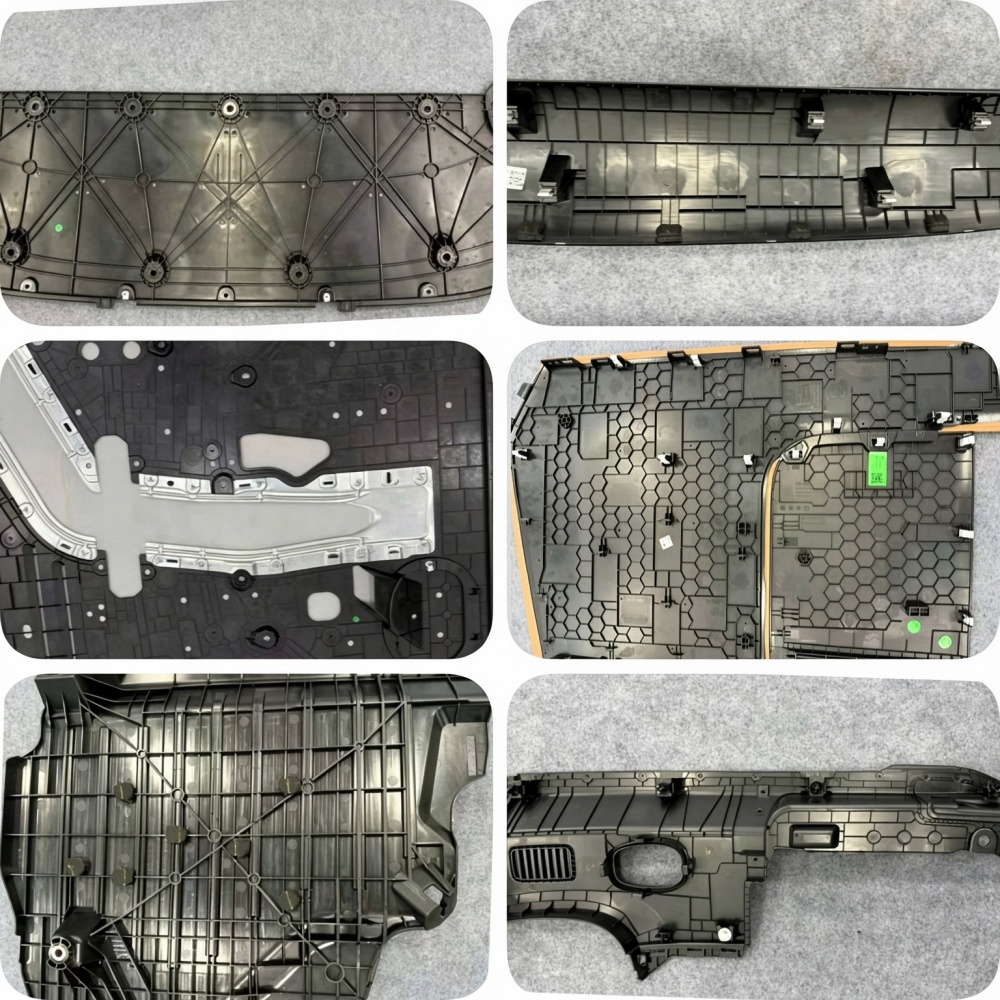
In automotive applications, reinforcing ribs are commonly used in:
What are the main functions of reinforcing ribs?
Ribs increase the cross-sectional moment of inertia, helping plastic components resist bending and reduce deflection under mechanical loads.
Properly positioned ribs provide additional structural support, helping components maintain their shape under mechanical stress and temperature variations.
Ribs around mounting points, screw bosses, and snap-fit connections help distribute loads and improve local structural stability.
Rib reinforcement provides an efficient way to achieve the required stiffness while controlling material consumption compared with increasing the entire component's wall thickness.
Effective rib design must balance mechanical performance with material characteristics and manufacturing requirements.
Ribs should be positioned according to the expected load paths and stress distribution.
For bending loads, ribs are generally arranged along the direction of the main structural span. For torsional loads, cross-rib or grid configurations may be considered.
The objective is to improve stiffness while distributing mechanical loads more evenly.
Excessively thick ribs can cause uneven cooling and material shrinkage, resulting in sink marks, internal voids, and warpage.
As a general starting point, rib thickness is often designed at approximately 50–60% of the nominal wall thickness. However, the appropriate ratio depends on the resin, fiber content, component geometry, and surface appearance requirements.
Sharp corners at the rib base can create stress concentration points.
Appropriate root radii and smooth transitions help reduce localized stress and improve resistance to cracking under repeated loading.
This is particularly important for fiber-reinforced thermoplastics, where material behavior and fiber orientation must also be considered.
Ribs must be designed with sufficient draft angles to facilitate mold release.
Deep or densely arranged ribs can also create challenges during mold filling, air venting, and cooling.
Proper mold design, gate positioning, and process optimization are essential to achieving consistent part quality.
For glass fiber reinforced plastics, fiber orientation during injection molding influences mechanical properties in different directions.
The flow path, rib layout, gate location, and potential weld-line positions should therefore be considered together.
A well-designed component must account for both the mechanical properties of the material and its behavior during processing.
Even with optimized rib geometry, the performance of a plastic component ultimately depends on the material used.
Different thermoplastics offer different levels of stiffness, impact resistance, dimensional stability, heat resistance, and long-term load-bearing performance.
For demanding structural applications, glass fiber reinforced thermoplastics offer an effective solution.
Short glass fiber reinforced materials improve stiffness and strength compared with unreinforced resins. They are widely used in injection-molded components requiring improved mechanical performance.
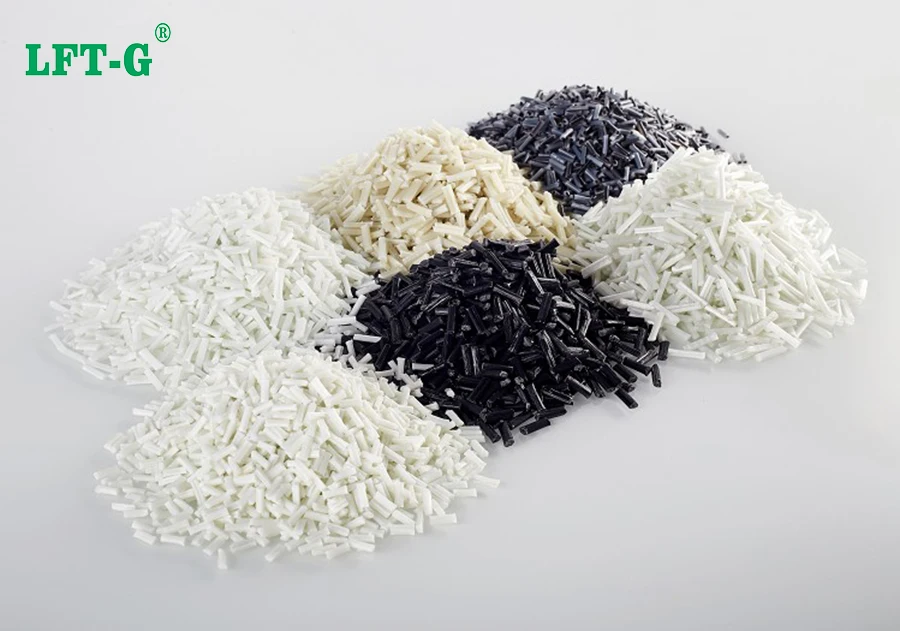
Long glass fiber reinforced thermoplastics feature longer fiber structures that can help improve impact resistance, structural integrity, and resistance to long-term deformation.
Compared with conventional short glass fiber reinforced materials, LGF compounds can offer advantages in applications involving complex loading conditions and demanding structural requirements.
The actual performance depends on fiber content, retained fiber length after processing, component geometry, and molding conditions. Material selection and component design should always be evaluated together.
At LFT-G, we develop and manufacture long fiber reinforced thermoplastic compounds for demanding industrial and automotive applications.
Our material portfolio includes PP, PA6, PA66, PA12, PPA, PPS, PEEK, and other engineering thermoplastic systems reinforced with long glass fibers or long carbon fibers.
For rib-reinforced plastic components, several material options are worth considering:
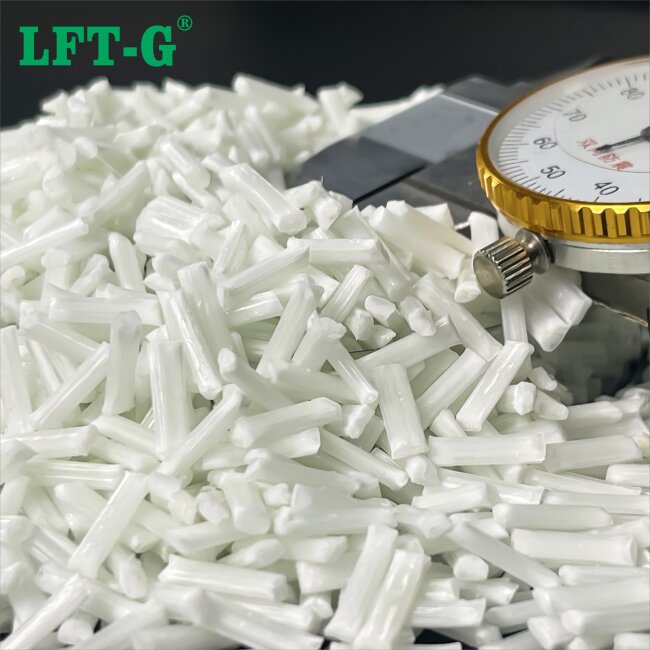
Long Glass Fiber Reinforced Polypropylene
Offers a combination of lightweight construction, stiffness, impact performance, and cost efficiency. Suitable for automotive interior and exterior structural components, battery-related parts, and protective housings.
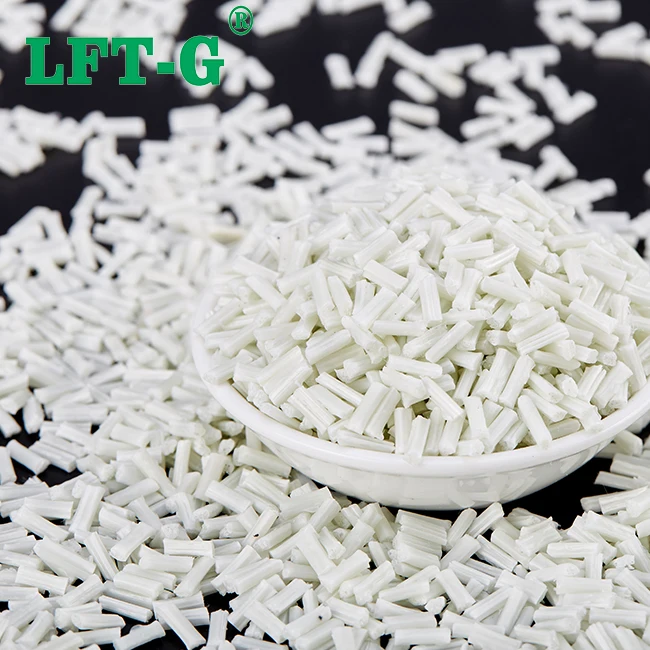
Long Glass Fiber Reinforced Polyamide 6
Provides enhanced mechanical strength, stiffness, and heat resistance, making it suitable for structural components requiring higher mechanical performance.
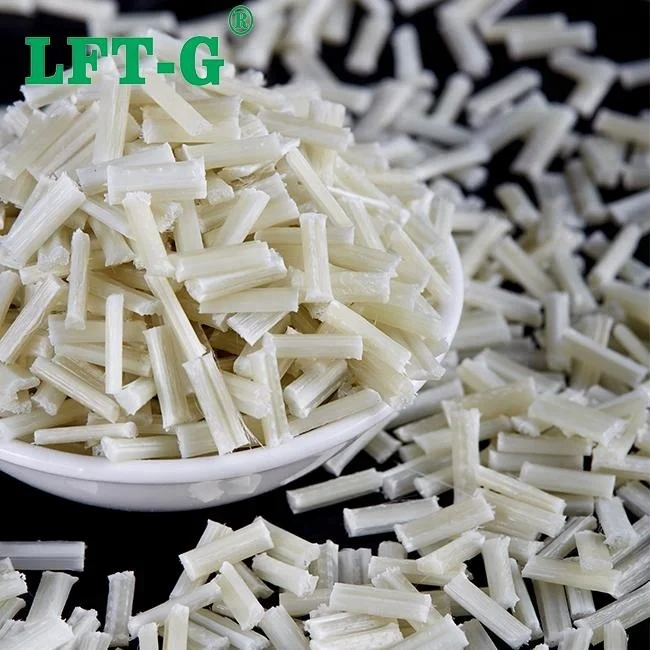
Long Glass Fiber Reinforced Polyamide 66
Offers high stiffness, strength, and thermal performance for demanding automotive and industrial applications.
The appropriate grade should be selected according to the component's load requirements, operating environment, processing conditions, and target performance.
Achieving reliable lightweight plastic components requires more than increasing fiber content or adding reinforcing ribs.
It requires a coordinated approach involving:
By combining well-engineered component structures with suitable long fiber reinforced thermoplastics, manufacturers can develop plastic parts with improved stiffness, mechanical reliability, and weight efficiency.
Looking for high-performance materials for automotive structural components?
Contact LFT-G to explore long glass fiber reinforced thermoplastic solutions for your structural plastic components and automotive applications.
Suivez nous :


-- obtenir des mises à jour avec les derniers sujets

 email
 français
 English
 Deutsch
 русский
 italiano
 español
 português
 العربية
 日本語
 한국의
 中文